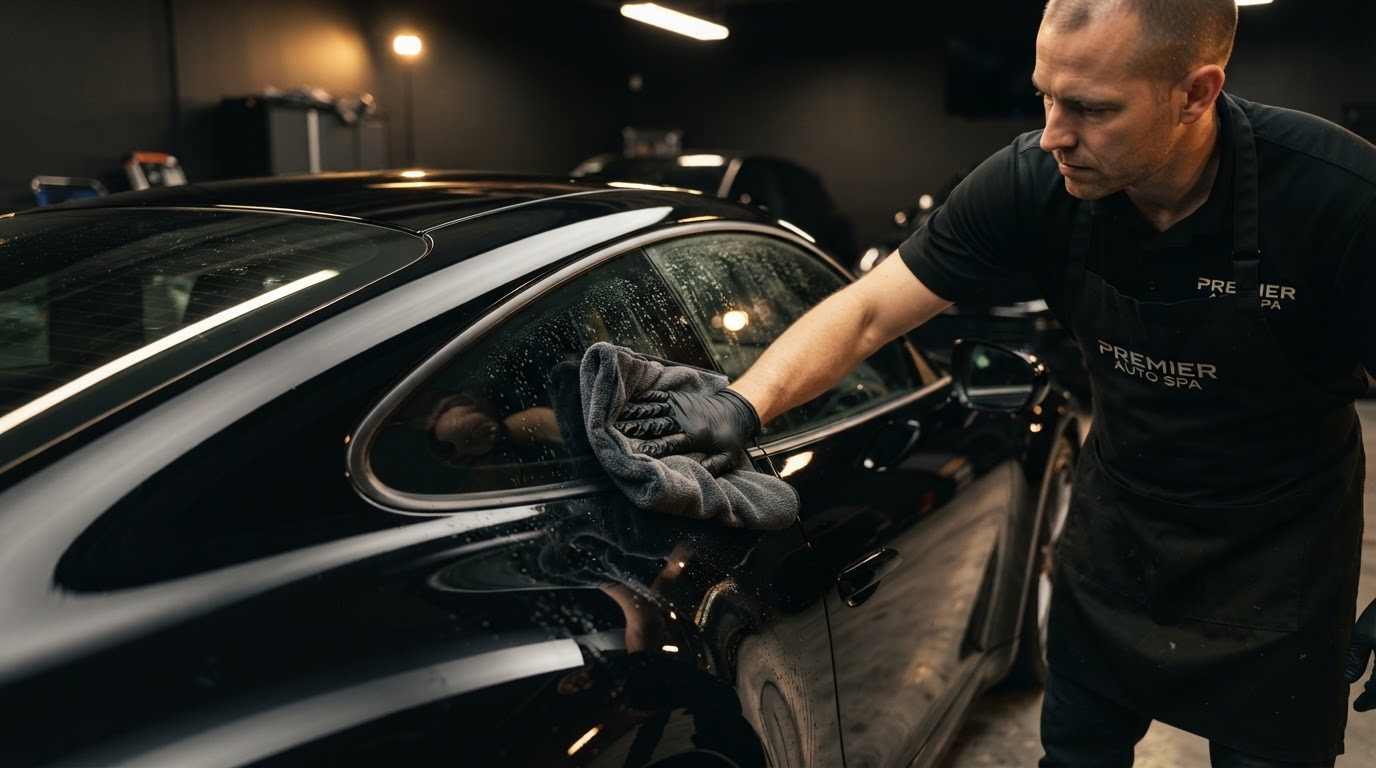
Water Spot Removal for Cars in NYC
Removal of hard water and mineral spots from vehicle paint and glass.
Water spot removal for cars in NYC removes hard water and mineral deposits that etch into paint and glass. Water spots form when mineral-laden water dries on the surface, leaving behind calcium and magnesium deposits that dull the finish and, if left, can etch into the clear coat.
What This Service Covers
Our Detailing Process
1Assess
Water spots are assessed to determine whether they are surface deposits or etched into the clear coat.
2Treat
Specialized removers dissolve mineral deposits from the paint and glass.
3Refine & Protect
Any etching is refined and a protective layer is applied to prevent recurrence.
How Water Spots Form
How Water Spots Form
Water spots form when water containing dissolved minerals — primarily calcium and magnesium, known as hard water — dries on a vehicle's surface. As the water evaporates, the minerals are left behind, depositing on the paint or glass. These deposits appear as the familiar cloudy spots or rings that dull the finish.
In NYC, water spots come from several sources. Tap water from washing, if not dried promptly, leaves mineral deposits. Sprinklers that hit parked vehicles spray hard water that dries into spots. Rain, particularly after dry periods, can carry acidic or mineral content that spots on the surface. And the city's water supply, while treated, is moderately hard, meaning it leaves deposits if allowed to dry.
The key factor is drying time. Water that is dried promptly leaves no spots; water left to dry on its own leaves mineral deposits. This is why drying the vehicle thoroughly after washing is one of the most effective ways to prevent water spots.
Surface Spots Versus Etching
Surface Spots Versus Etching
Water spots exist in two forms, and the distinction matters for removal. Surface spots are mineral deposits sitting on top of the paint or glass. These are relatively easy to remove with the right chemical, which dissolves the minerals so they can be wiped away. Surface spots are what form when water dries recently.
Etched spots are more serious. When mineral deposits are left on the surface, especially in sunlight, the minerals can etch into the clear coat, creating a depression that remains even after the deposit is removed. Etching is the result of neglect — spots that have been left long enough to damage the clear coat.
Water spot removal addresses both. Surface spots are dissolved and removed chemically. Etched spots require refinement — polishing to level the clear coat around the etching, reducing the visibility of the depression. Prompt treatment prevents etching, which is why addressing water spots quickly is important.
The Water Spot Removal Process
The Water Spot Removal Process
Water spot removal begins with assessing whether the spots are surface deposits or etched into the clear coat. For surface spots, a specialized water spot remover — a mild acid formulated to dissolve calcium and magnesium — is applied to the paint and glass. The remover breaks down the mineral deposits, allowing them to be wiped away with microfiber.
For glass, which is particularly prone to water spots and can tolerate more aggressive treatment, the removal may include a glass polish or fine abrasive to remove stubborn deposits and restore clarity. Glass water spots are common on windshields and rear windows, where sprinklers and rain leave visible deposits.
For etched spots on paint, the process includes refinement. After the mineral deposits are removed, the etched areas are polished to level the clear coat, reducing the visibility of the depressions. A protective layer is then applied to help prevent future spotting and preserve the refined surface.
Preventing Water Spots
Preventing Water Spots
Prevention is the best approach to water spots, and it comes down to keeping the surface dry and protected. After washing, the vehicle should be dried thoroughly with clean microfiber towels, leaving no water to dry into spots. This single habit prevents most water spots.
Avoiding sprinkler exposure — parking away from sprinklers that can hit the vehicle — prevents the hard water spots that sprinklers cause. If the vehicle is sprayed, rinsing and drying it promptly prevents the deposits from forming.
Protection also helps. A wax, sealant, or ceramic coating creates a hydrophobic surface that causes water to bead and slide off rather than sitting and drying into spots. Ceramic coating, in particular, makes the surface resistant to water spotting, since water does not adhere as readily and the minerals have less opportunity to deposit. For NYC drivers, this protection is a valuable defense against the city's hard water and sprinkler exposure.
Water Spot Removal Within a Detail
Water Spot Removal Within a Detail
Water spot removal is often performed as part of an exterior detail or paint correction service. Within a detail, surface water spots are addressed during the decontamination stage, restoring the paint's clarity. For etched spots, the refinement is part of the polishing or correction process.
For NYC drivers, whose vehicles face hard water, sprinklers, and rain, water spot removal is a valuable service for restoring clarity to paint and glass. Combined with protection, it keeps the surfaces clear and resistant to future spotting.
Explore our exterior car detailing, car polishing, and ceramic coating services to see how water spot removal fits into a complete paint care program. As a targeted treatment or part of a full detail, professional water spot removal restores the clarity of paint and glass affected by hard water and mineral deposits.
FAQ
Water Spot Removal Car NYC — Frequently Asked Questions
Can water spots be removed from paint?
Yes. Surface spots are dissolved chemically; etched spots may require polishing to refine the clear coat.
Are water spots permanent?
Surface spots are removable. Spots left too long can etch the clear coat, but etching can often be reduced with polishing.
How do I prevent water spots?
Dry the vehicle thoroughly after washing, avoid sprinkler exposure, and apply a protective wax or coating.
Can you remove water spots from glass?
Yes, with specialized removers and, for stubborn deposits, glass polishing.
Does ceramic coating prevent water spots?
It helps. A hydrophobic coating causes water to slide off, reducing the water that dries into spots.
Explore
Related Detailing Services
Interior Car Detailing NYC
Deep interior cleaning for seats, carpets, dashboard and every surface.
Exterior Car Detailing NYC
Exterior vehicle cleaning, paint care, wheels and surface protection.
Full Car Detailing NYC
Complete interior and exterior detailing in one comprehensive service.
Mobile Car Detailing NYC
On-site car detailing at your home, office, or location across NYC.
Paint Correction NYC
Automotive paint correction to remove swirls, scratches and defects.
Ceramic Coating NYC
Automotive ceramic coating for long-lasting paint protection and gloss.
Serving All Five Boroughs
Ready for a Showroom-Quality Detail?
Mobile car detailing available across Brooklyn, Manhattan, Queens, Staten Island & the Bronx.