Car Polishing in NYC
Car polishing for paint gloss enhancement and a flawless finish.
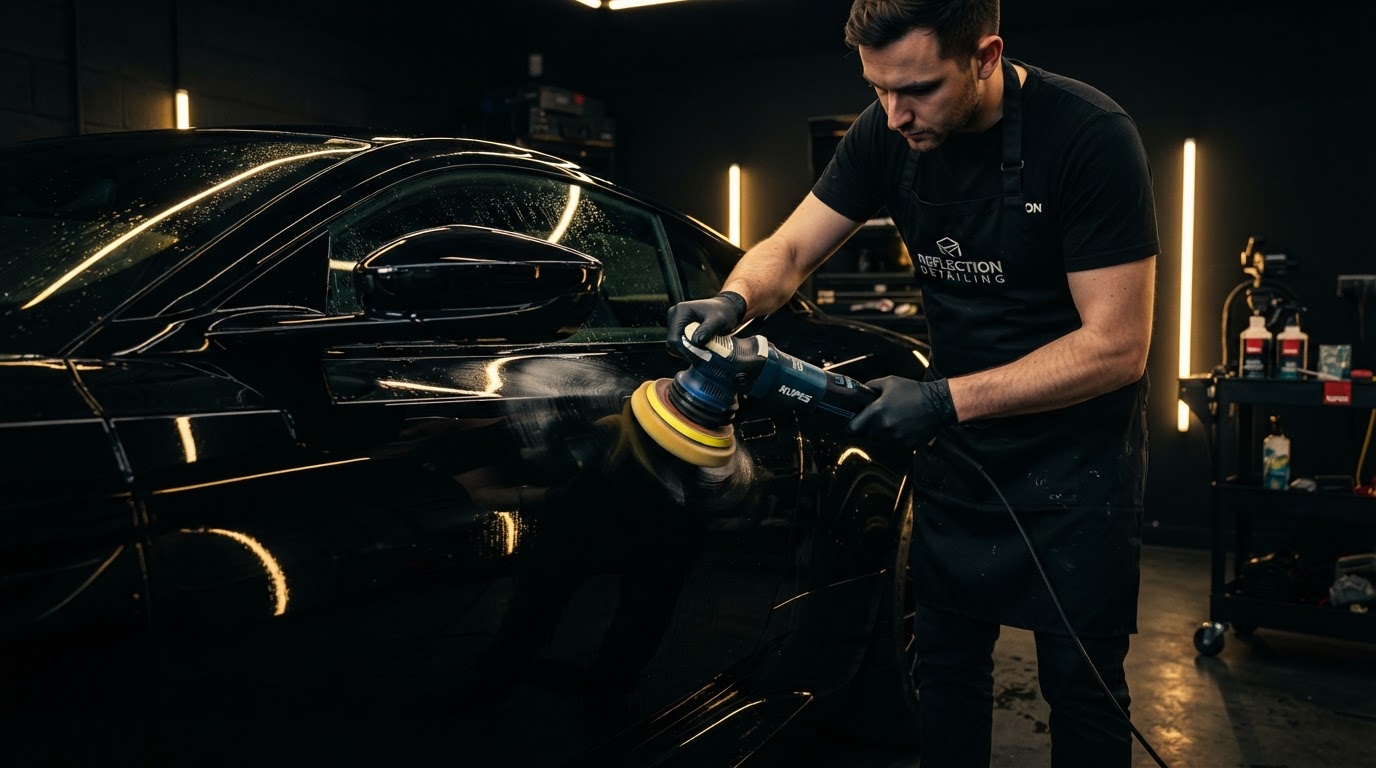
Car polishing in NYC refines the paint surface to enhance gloss and remove light imperfections such as fine swirls and dullness. Automotive paint polishing brings back a smooth, reflective finish that makes the vehicle look freshly detailed.
What This Service Covers
Our Detailing Process
1Clean & Assess
Paint is cleaned and assessed to determine the right polish and pad combination.
2Polish
A fine polish is machine-applied to refine the surface and enhance gloss.
3Protect
A protective layer is applied to maintain the freshly polished finish.
What Car Polishing Does
What Car Polishing Does
Car polishing refines the surface of the paint to enhance gloss and remove light imperfections. Unlike paint correction, which is a more aggressive process that levels deeper defects, polishing is a lighter refinement that focuses on restoring clarity, depth, and reflection. It is the process that gives paint its smooth, glass-like finish.
Over time, even well-maintained paint accumulates fine swirls, light scratches, and a general dullness from washing, environmental exposure, and UV. Polishing removes these light imperfections, restoring the paint's ability to reflect light cleanly and evenly. The result is a noticeable increase in gloss and depth, with a finish that looks freshly detailed.
For NYC drivers, polishing is an effective way to refresh a vehicle's appearance without the time and cost of a full paint correction. It is ideal for paint that is in good condition but has lost some of its luster, and it serves as excellent preparation for wax or ceramic coating, both of which perform best on a smooth, refined surface.
Polishing Versus Paint Correction
Polishing Versus Paint Correction
The distinction between polishing and paint correction is one of aggressiveness. Paint correction uses cutting compounds to level deeper defects — swirls, scratches, oxidation, and holograms — and typically involves multiple stages to achieve a flawless finish. It is the right choice for paint with significant defects.
Polishing, by contrast, uses finer polishes and finishing pads to refine the surface and remove only the lightest imperfections. It enhances gloss and clarity without removing significant clear coat. For paint that is already in decent condition, polishing delivers a visible improvement with less risk and less cost than a full correction.
The right choice depends on the paint's condition. An inspection under proper lighting reveals the depth and extent of the defects, and the detailer can recommend polishing for light imperfections or correction for deeper ones. Many vehicles benefit from polishing as part of regular maintenance, with correction reserved for when defects have accumulated beyond what a polish can address.
The Polishing Process
The Polishing Process
Polishing begins with a clean, decontaminated surface. The vehicle is washed and clayed so the polish works on clean paint rather than dragging contaminants across the surface. The paint is then assessed under proper lighting to determine the right polish and pad combination for the paint's hardness and condition.
A fine polish is machine-applied, working panel by panel to refine the surface. The polish removes light imperfections and micro-marring, leaving the paint smooth and reflective. The detailer checks results under lighting as they work, ensuring uniform gloss across the vehicle. Edges, curves, and difficult areas receive careful attention to avoid uneven results.
Once the polish is complete, a protective layer is applied. This is a critical step, since polishing removes any existing protection and leaves the freshly refined paint exposed. A wax, sealant, or ceramic coating locks in the gloss and defends the finish, preserving the results of the polish.
Gloss Enhancement and the Wet Look
Gloss Enhancement and the Wet Look
The most visible result of polishing is gloss enhancement. By refining the surface and removing the light imperfections that scatter light, polishing restores the paint's ability to reflect cleanly. The finish takes on a smooth, wet look, with depth and clarity that bare, dull paint cannot achieve.
This gloss enhancement is what makes a polished vehicle look freshly detailed. Even paint in good condition benefits, since the polish removes the fine haze and micro-marring that accumulate with normal washing and use. The result is a richer, more reflective finish that stands out.
For drivers who want the maximum gloss, polishing can be combined with paint correction for deeper defect removal, followed by ceramic coating for long-term protection. This combination delivers a flawless, high-gloss finish that is locked in and defended. For simpler refreshes, polishing followed by wax is an effective, accessible option.
When to Polish Your Car
When to Polish Your Car
Polishing is appropriate whenever paint looks dull, shows light swirls, or has lost its reflective quality. It is a common step in a full detail, refreshing the paint's appearance before protection is applied. It is also valuable before selling or showing a vehicle, when a glossy, well-presented finish matters.
For regular maintenance, polishing once or twice a year keeps paint looking its best, with wax or sealant applied afterward to protect the refined surface. Drivers who use automatic car washes, which introduce swirls, may benefit from more frequent polishing to counter the damage.
Explore our paint correction, car waxing, and ceramic coating services to see how polishing fits into a complete paint care program. Whether as a standalone gloss enhancement or the refinement step of a larger detail, professional car polishing restores the shine and depth that make a vehicle look its best.
FAQ
Car Polishing NYC — Frequently Asked Questions
What is the difference between polishing and paint correction?
Polishing is a lighter refinement for gloss. Paint correction is a more aggressive process that removes deeper defects.
Will polishing remove scratches?
It removes very light scratches and swirls. Deeper defects need paint correction.
How often should I polish my car?
Once or twice a year is typical, depending on paint condition.
Should I wax after polishing?
Yes. Polishing removes existing protection, so wax or coating should be applied to protect the refined finish.
Does polishing improve gloss?
Yes. Polishing refines the surface to restore clarity, depth, and reflection for a wet-look finish.
Explore
Related Detailing Services
Interior Car Detailing NYC
Deep interior cleaning for seats, carpets, dashboard and every surface.
Exterior Car Detailing NYC
Exterior vehicle cleaning, paint care, wheels and surface protection.
Full Car Detailing NYC
Complete interior and exterior detailing in one comprehensive service.
Mobile Car Detailing NYC
On-site car detailing at your home, office, or location across NYC.
Paint Correction NYC
Automotive paint correction to remove swirls, scratches and defects.
Ceramic Coating NYC
Automotive ceramic coating for long-lasting paint protection and gloss.
Serving All Five Boroughs
Ready for a Showroom-Quality Detail?
Mobile car detailing available across Brooklyn, Manhattan, Queens, Staten Island & the Bronx.