Headlight Restoration in NYC
Restore cloudy, oxidized headlights to clear, like-new lenses.
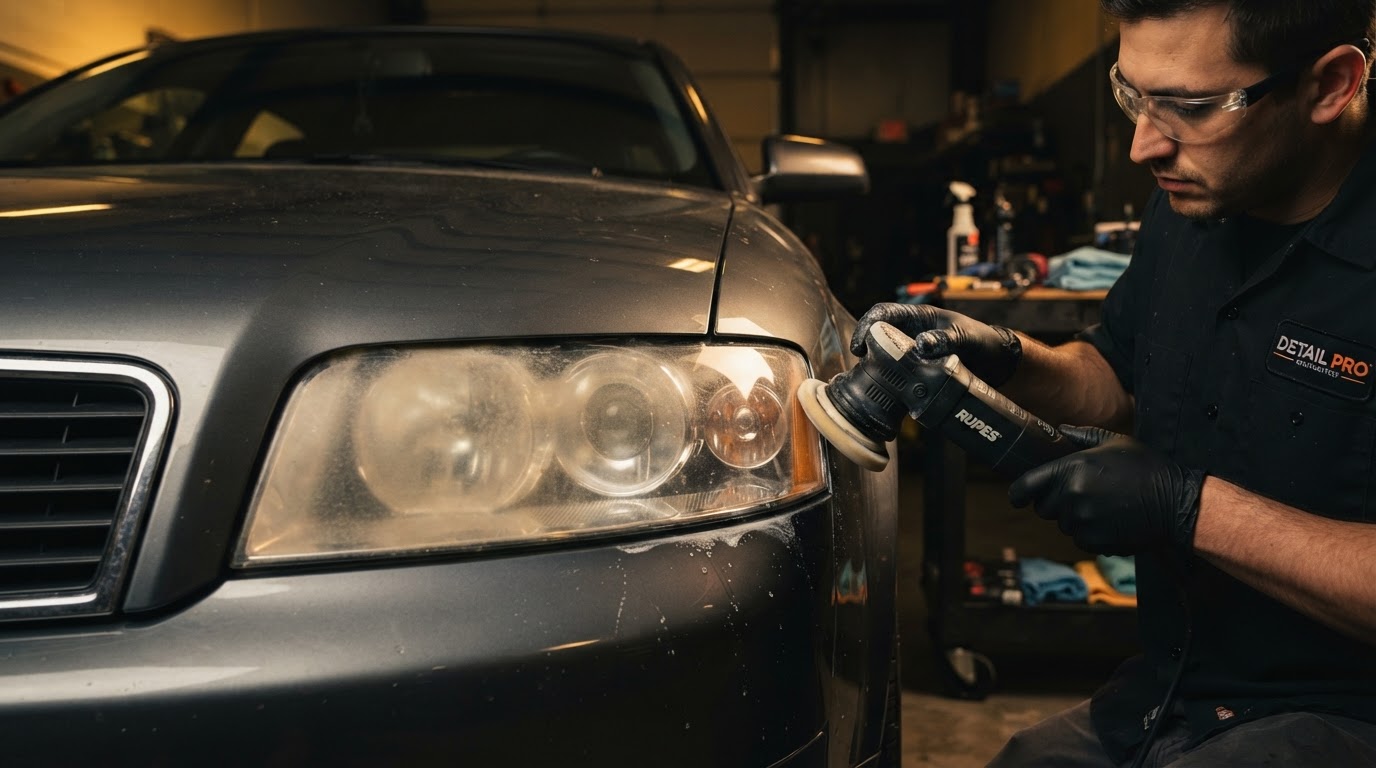
Headlight restoration in NYC restores cloudy, oxidized headlights to a clear, like-new appearance. UV exposure and city pollution yellow and haze plastic lenses over time, reducing both appearance and nighttime visibility. Headlight lens restoration sands and polishes the lens back to clarity.
What This Service Covers
Our Detailing Process
1Clean & Mask
Headlights are cleaned and surrounding paint is masked off.
2Sand
Progressive sanding removes oxidation and yellowing from the lens.
3Polish & Protect
The lens is polished to clarity and protected against future UV damage.
Why Headlights Cloud and Oxidize
Why Headlights Cloud and Oxidize
Modern vehicle headlights are made of polycarbonate plastic, a durable material that is also vulnerable to UV damage. Over time, sun exposure breaks down the protective UV coating on the lens, and the plastic beneath begins to oxidize, developing the cloudy, yellowed, or hazy appearance that affects older vehicles.
In NYC, the combination of UV exposure, pollution, and the general environmental wear of city driving accelerates this process. The oxidation is not just a cosmetic issue — it reduces the light output of the headlight, dimming the beam and reducing nighttime visibility. A severely oxidized headlight can cut light output significantly, affecting both safety and appearance.
Headlight restoration in NYC addresses this oxidation. Rather than replacing the headlights, which is costly, restoration sands and polishes the lens back to clarity, removing the oxidized layer and revealing the clear plastic beneath. The result is a clear, like-new lens that looks better and performs better.
The Restoration Process
The Restoration Process
Headlight restoration begins with cleaning the lens and masking off the surrounding paint to protect it from the sanding and polishing. The lens is then sanded with progressively finer grits of sandpaper, which removes the oxidized, yellowed layer from the surface.
The sanding starts with a coarser grit to cut through the oxidation, then progresses to finer grits to refine the surface, removing the scratches left by each previous grit. This progressive process leaves the lens smooth and ready for polishing. Sanding is the step that does the heavy lifting, removing the damaged layer that causes the clouding.
Once sanded, the lens is polished to restore clarity and gloss. A polishing compound and buffing pad bring the plastic back to a clear, transparent finish, removing the fine sanding marks and restoring the lens to a like-new appearance. A UV-protective coating is then applied to shield the newly restored lens from future oxidation.
Improving Visibility and Appearance
Improving Visibility and Appearance
The most immediate benefit of headlight restoration is appearance. Cloudy, yellowed headlights make a vehicle look older and poorly maintained, while clear lenses restore a fresh, well-cared-for appearance. The front of the vehicle, which is the most visible part, is transformed by clear headlights.
Beyond appearance, restoration improves visibility. Oxidized lenses scatter and absorb light, reducing the beam's reach and clarity. Clearing the lens restores the light output, improving nighttime visibility and driving safety. This is a functional improvement as well as a cosmetic one, and it is one of the most valuable restorations for older vehicles.
For NYC drivers, whose vehicles face constant UV and environmental exposure, headlight restoration is a high-impact service. It restores both the look and the function of the headlights, often for a fraction of the cost of replacement.
How Long Restoration Lasts
How Long Restoration Lasts
Headlight restoration results typically last one to two years, depending on UV exposure and the protection applied. The process removes the oxidized layer and applies a protective coating, but the lens continues to face UV exposure, so some recurrence of oxidation over time is normal.
The protective coating applied after restoration is what extends the result. A quality coating shields the plastic from UV, slowing the re-oxidation that caused the original clouding. Reapplication of protection, as part of periodic detailing, can further extend the clarity of the lenses.
For vehicles that have been restored, ongoing protection — like ceramic coating or a UV-specific sealant — helps maintain the clarity longest. Combined with regular exterior detailing, this keeps the headlights clear and the front of the vehicle looking its best.
Restoration Versus Replacement
Restoration Versus Replacement
Headlight restoration is the alternative to replacement for cloudy, oxidized lenses. Where replacement can cost hundreds or thousands of dollars per headlight, restoration restores the existing lens for a fraction of the cost, with results that are often indistinguishable from a new lens.
Restoration is effective for the vast majority of cloudy or oxidized headlights. Severely damaged lenses — cracked, broken, or with internal moisture — may require replacement, but lenses that are simply cloudy, yellowed, or hazy respond well to restoration. An inspection reveals whether restoration is appropriate.
For NYC drivers, restoration is a high-value service that restores both the appearance and the safety function of the headlights. Explore our exterior car detailing and car polishing services to see how headlight restoration fits into a complete exterior care program.
FAQ
Headlight Restoration NYC — Frequently Asked Questions
How long does headlight restoration last?
Results typically last one to two years depending on UV exposure and protection.
Can all headlights be restored?
Most cloudy or oxidized plastic lenses can be restored. Severely damaged lenses may need replacement.
Does restoration improve visibility?
Yes, clearing haze improves light output and nighttime visibility.
Is restoration better than replacement?
For cloudy or oxidized lenses, restoration restores clarity for a fraction of the replacement cost.
What causes headlights to cloud?
UV exposure breaks down the protective coating on polycarbonate lenses, causing oxidation and yellowing.
Explore
Related Detailing Services
Interior Car Detailing NYC
Deep interior cleaning for seats, carpets, dashboard and every surface.
Exterior Car Detailing NYC
Exterior vehicle cleaning, paint care, wheels and surface protection.
Full Car Detailing NYC
Complete interior and exterior detailing in one comprehensive service.
Mobile Car Detailing NYC
On-site car detailing at your home, office, or location across NYC.
Paint Correction NYC
Automotive paint correction to remove swirls, scratches and defects.
Ceramic Coating NYC
Automotive ceramic coating for long-lasting paint protection and gloss.
Serving All Five Boroughs
Ready for a Showroom-Quality Detail?
Mobile car detailing available across Brooklyn, Manhattan, Queens, Staten Island & the Bronx.