Car Tar Removal in NYC
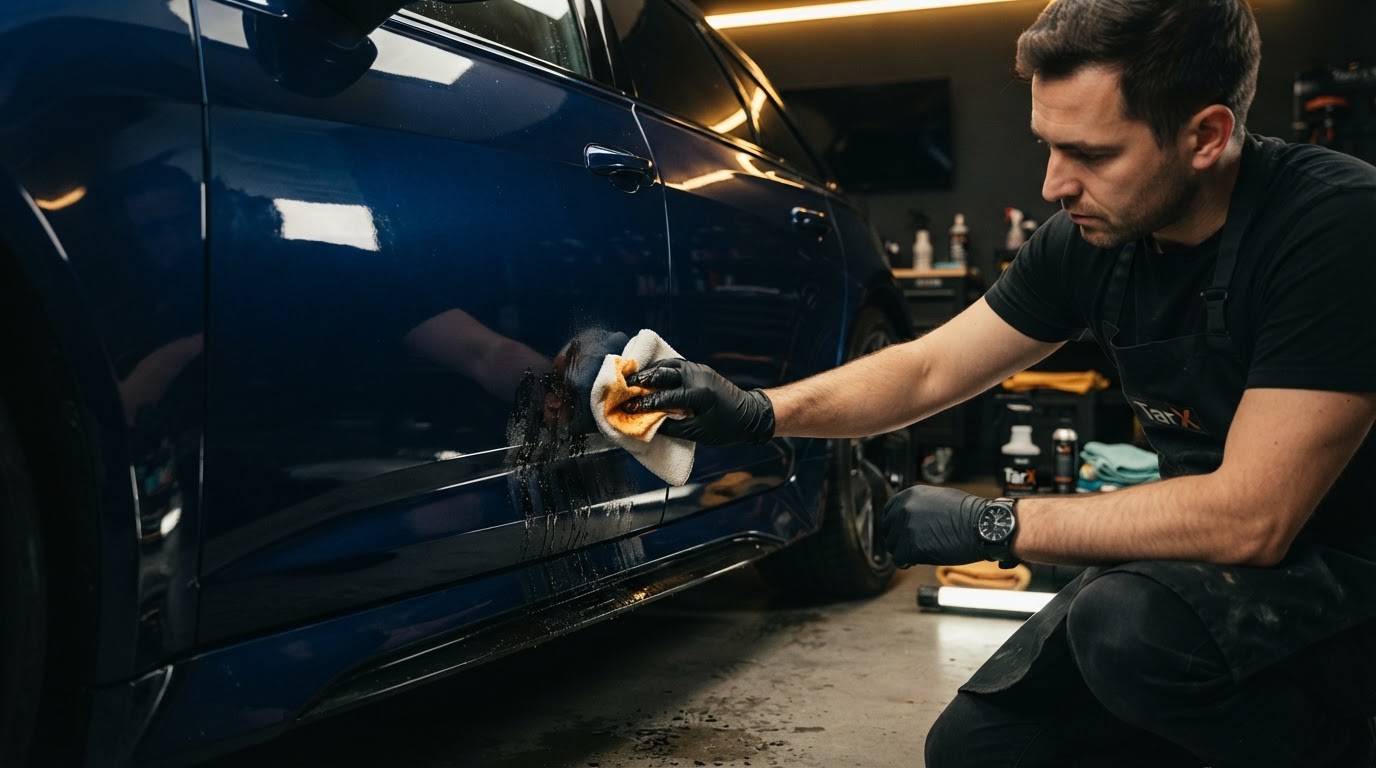
Removal of road tar and asphalt from the lower panels of the vehicle.
Car tar removal in NYC removes road tar and asphalt that flings onto the lower panels of the vehicle during driving. Tar bonds strongly to paint and, if left, can stain and dull the finish, so specialized tar removers are used to dissolve and lift the deposits safely.
What This Service Covers
Our Detailing Process
1Apply
A tar remover is applied to dissolve the bonded tar.
2Lift
The dissolved tar is lifted from the paint.
3Clean & Protect
The area is cleaned and a protective layer is applied.
How Tar Gets on Your Vehicle
How Tar Gets on Your Vehicle
Road tar and asphalt fling onto vehicles during driving, particularly in warm weather when road surfaces are hot and sticky. As tires roll over tar and asphalt, the material picks up and flings onto the lower panels of the vehicle — the rocker panels, wheel arches, lower doors, and behind the wheels. The tar bonds to the paint on contact, creating dark spots and a rough texture.
In NYC, where road work and resurfacing are common, tar exposure is a frequent issue. Freshly laid asphalt, tar patches, and the general road grime of city driving all contribute to the tar that accumulates on the lower panels. Over time, this tar builds up, dulling the finish and creating an unsightly, rough texture.
Car tar removal in NYC addresses this contamination. By dissolving the bonded tar with specialized removers, the deposits are lifted safely, restoring a clean, smooth lower-panel appearance without the scrubbing that could scratch the paint.
The Tar Removal Process
The Tar Removal Process
Tar removal requires the right chemical, because tar is resistant to ordinary soap and water. A tar remover — a solvent formulated to dissolve asphalt and road tar — is applied to the affected areas. The remover breaks down the tar, dissolving its bond with the paint so it can be lifted.
The remover is allowed to dwell, giving it time to dissolve the tar. As the tar breaks down, it loosens from the surface and can be wiped away with microfiber. For heavy tar buildup, the process may be repeated, with additional applications to fully dissolve and lift the deposits.
The area is then cleaned to remove any residue, and the surface is inspected. Tar that has been left for a long time may have stained the paint, in which case light polishing can refine the stain and restore a uniform finish. A protective layer is then applied to help prevent future adhesion.
Tar on Lower Panels and Wheels
Tar on Lower Panels and Wheels
Tar primarily affects the lower panels of the vehicle — the areas closest to the tires that receive the flung material. The rocker panels, wheel arches, lower doors, and the area behind the wheels are the most affected. These panels collect tar, road grime, and the general contamination of driving, creating a rough, dull appearance.
Wheels also collect tar, alongside brake dust and road grime. The wheel faces and barrels can accumulate tar deposits that require removal during wheel detailing. Tar on wheels is addressed with the same tar removers, dissolving the deposits before the wheels are cleaned and protected.
For both the lower panels and the wheels, the goal is complete removal of the tar without damage to the underlying finish. The restored surfaces are smooth and clean, with the dark tar spots and rough texture eliminated. Protection is then applied to reduce future adhesion.
Preventing Tar Buildup
Preventing Tar Buildup
Tar is difficult to prevent entirely, since it comes from the road surface during driving. However, protection reduces the adhesion and makes removal easier. A wax, sealant, or ceramic coating creates a barrier between the tar and the paint, giving the tar less to bond to and allowing it to be removed more easily.
Regular washing, particularly of the lower panels, removes loose tar before it bonds heavily. Addressing tar promptly, before it has time to set and stain, prevents the buildup that becomes difficult to remove. For drivers who regularly encounter fresh road work, this prompt attention keeps the lower panels clean.
For paint that has accumulated tar, professional removal restores the finish. Combined with protection, it keeps the lower panels smooth and free of the dark deposits that road tar leaves behind.
Tar Removal Within a Detail
Tar Removal Within a Detail
Tar removal is often performed as part of an exterior detail or decontamination service. Within a detail, tar is addressed during the decontamination stage, alongside other bonded contaminants like sap, iron, and overspray. The tar remover dissolves the deposits, and the surface is restored to a smooth, clean finish.
For NYC drivers, whose vehicles face constant road work and the tar exposure of city driving, tar removal is a valuable service for maintaining the lower panels. Combined with regular decontamination and protection, it keeps the paint smooth and free of the bonded tar that dulls the finish.
Explore our car paint decontamination, clay bar treatment, and exterior car detailing services to see how tar removal fits into a complete paint care program. As a targeted treatment or part of a full detail, professional car tar removal dissolves road tar and restores a clean, smooth finish.
FAQ
Car Tar Removal NYC — Frequently Asked Questions
Can tar be removed from car paint?
Yes. A tar remover dissolves the bonded tar so it can be lifted safely without scrubbing.
Will tar damage my paint?
It can stain and dull the finish if left. Prompt removal prevents lasting damage.
Where does tar usually collect?
On the lower panels — rocker panels, wheel arches, lower doors, and behind the wheels.
Can you remove tar from wheels?
Yes, with tar remover during wheel detailing.
How do I prevent tar buildup?
Apply a protective wax or coating to reduce adhesion, and wash the lower panels regularly.
Explore
Related Detailing Services
Interior Car Detailing NYC
Deep interior cleaning for seats, carpets, dashboard and every surface.
Exterior Car Detailing NYC
Exterior vehicle cleaning, paint care, wheels and surface protection.
Full Car Detailing NYC
Complete interior and exterior detailing in one comprehensive service.
Mobile Car Detailing NYC
On-site car detailing at your home, office, or location across NYC.
Paint Correction NYC
Automotive paint correction to remove swirls, scratches and defects.
Ceramic Coating NYC
Automotive ceramic coating for long-lasting paint protection and gloss.
Serving All Five Boroughs
Ready for a Showroom-Quality Detail?
Mobile car detailing available across Brooklyn, Manhattan, Queens, Staten Island & the Bronx.