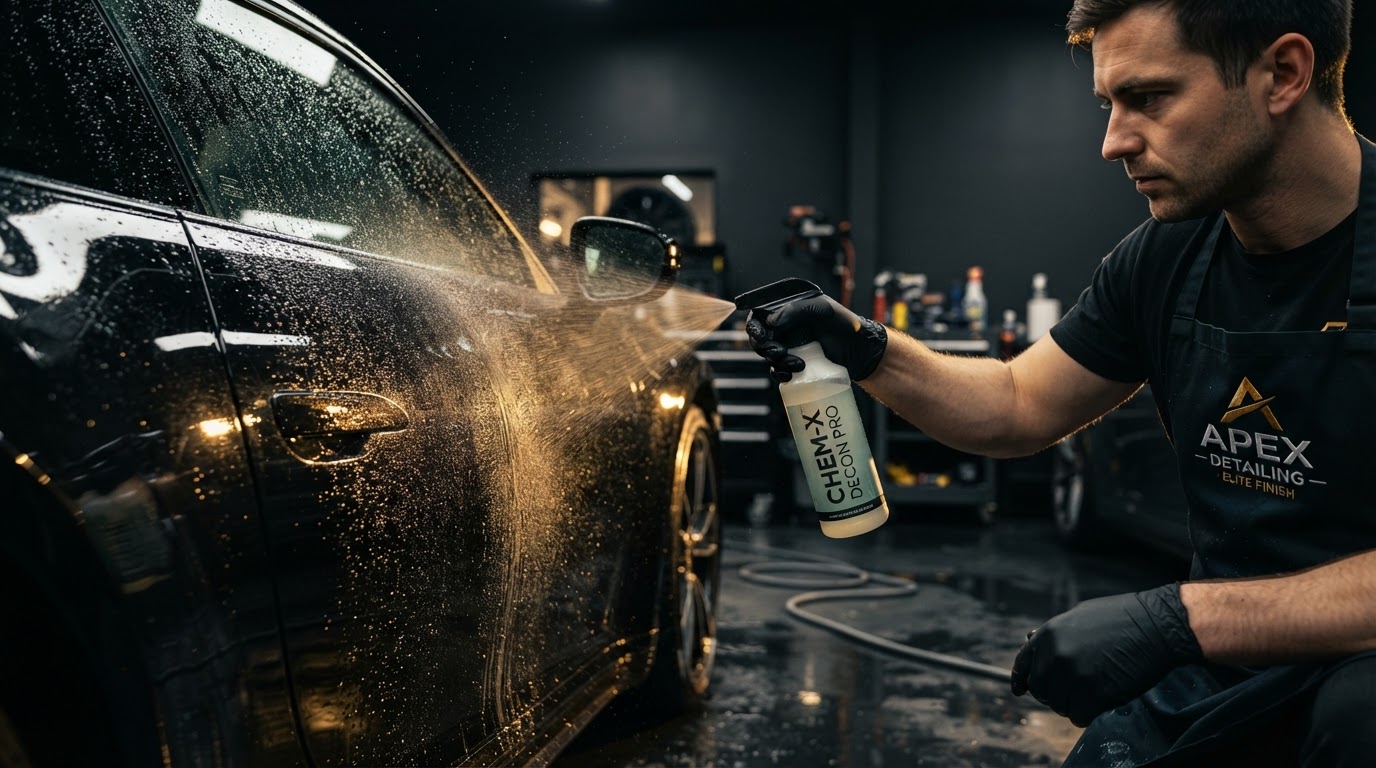
Car Paint Decontamination in NYC
Chemical and mechanical decontamination to prepare paint for correction.
Car paint decontamination in NYC removes bonded contaminants from your vehicle's paint using a combination of chemical and mechanical methods. Proper paint surface preparation is essential before paint correction or protection, ensuring compounds, polishes, and coatings perform as intended.
What This Service Covers
Our Detailing Process
1Chemical Decontamination
Specialized chemicals dissolve iron, tar, and water-soluble contaminants bonded to the paint.
2Mechanical Decontamination
A clay bar or clay mitt mechanically removes remaining bonded particles.
3Rinse & Inspect
The surface is rinsed and inspected to confirm it is fully clean and smooth.
What Paint Decontamination Addresses
What Paint Decontamination Addresses
Car paint decontamination removes the bonded contaminants that accumulate on a vehicle's paint and cannot be removed by washing. In an urban environment like NYC, these contaminants are plentiful: iron particles from brake dust and rail dust, tar and asphalt from road work, tree sap from street parking, industrial and construction overspray, and the general airborne pollution that settles on every surface.
These contaminants bond to the clear coat and, over time, dull the finish, interfere with protection, and in some cases actively damage the paint. Iron particles oxidize and embed in the clear coat, causing the orange-brown specks visible on light-colored paint. Sap and bug residue are acidic and can etch the surface. Tar and overspray create a rough, uneven texture that no amount of washing will remove.
Decontamination addresses all of these. By combining chemical and mechanical methods, it removes the full range of bonded contaminants, leaving the paint clean, smooth, and properly prepared for whatever comes next — polishing, correction, waxing, or coating.
Chemical Decontamination
Chemical Decontamination
Chemical decontamination uses specialized products to dissolve specific contaminants. Iron removers react with ferrous particles — brake dust, rail dust, industrial fallout — turning them purple as they dissolve, so they can be rinsed away. This is particularly effective for the embedded iron that causes the speckling visible on white and light-colored vehicles.
Tar removers dissolve the tar and asphalt that fling onto lower panels from hot road surfaces. Sap removers tackle the sticky tree sap that bakes onto paint under street trees. Water spot removers address the mineral deposits left by hard water and sprinklers. Each chemical is matched to the contaminant it is designed to address.
Chemical decontamination is efficient and thorough, dissolving contaminants that would otherwise require aggressive mechanical action. It also reaches areas that are difficult to clay, such as tight seams and textured trim. By dissolving what it can, it reduces the mechanical work that follows, making the overall process safer and more effective.
Mechanical Decontamination
Mechanical Decontamination
After chemical decontamination dissolves what it can, mechanical decontamination removes the remaining bonded particles. This is typically done with a clay bar or clay mitt, which is glided across a lubricated surface to pull contaminants from the clear coat. The clay physically grabs the particles and lifts them away.
Mechanical decontamination is what produces the perfectly smooth surface that protection and polishing require. Even after chemical treatment, some contaminants remain embedded in the clear coat, and only mechanical action can remove them. The combination of the two methods provides the most thorough result.
The process is performed carefully to avoid scratching. Proper lubrication, clean clay, and a methodical approach ensure the contaminants are removed without introducing new defects. The result is paint that feels glass-smooth and is fully prepared for the next stage of care.
Why Decontamination Is Essential Before Correction and Coating
Why Decontamination Is Essential Before Correction and Coating
Paint correction and ceramic coating both depend on a clean, decontaminated surface. Correction uses machine polishers to level the clear coat, and any bonded contaminant caught under a polishing pad will be dragged across the paint, causing scratches and marring. Decontamination removes these contaminants so correction can proceed safely and evenly.
Ceramic coating bonds chemically with the paint, and that bond requires a perfectly clean surface. Contaminants trapped beneath a coating prevent proper bonding, causing the coating to fail prematurely and locking the contamination against the paint. Decontamination is a non-negotiable step in coating preparation, ensuring the coating bonds to clean paint and performs as intended.
Even for simpler protection like wax, decontamination improves results. Wax applied over contaminated paint bonds to the contamination rather than the paint, reducing both gloss and durability. By decontaminating first, any protection performs better and lasts longer.
Decontamination as Part of a Detail
Decontamination as Part of a Detail
Decontamination is typically performed as part of a larger detail or as preparation for advanced services. In a full exterior detail, it follows the wash and precedes the application of protection, ensuring the wax or sealant bonds to clean paint. Before paint correction or ceramic coating, it is the essential preparation that makes those services possible.
For NYC drivers, decontamination is particularly valuable given the level of environmental exposure. The combination of brake dust, sap, tar, and pollution means contamination accumulates quickly, and periodic decontamination keeps it under control. An annual or semi-annual decontamination, as part of a detail, maintains the paint's condition and prepares it for protection.
Explore our clay bar treatment, paint correction, and ceramic coating services to see how decontamination fits into a complete paint care program. As a standalone refresh or the foundation for advanced care, car paint decontamination is essential for smooth, clean, well-prepared paint.
FAQ
Car Paint Decontamination NYC — Frequently Asked Questions
What is the difference between chemical and mechanical decontamination?
Chemical decontamination dissolves contaminants; mechanical decontamination physically pulls them from the paint. Both are often used together.
Is decontamination needed before waxing?
It is recommended, especially on older or city-driven vehicles, for the best wax adhesion and gloss.
Can decontamination remove tar and sap?
Yes, with the correct chemical products and technique.
Why is decontamination required before ceramic coating?
Contaminants prevent the coating from bonding properly. A clean surface is essential for coating performance and durability.
How often should paint be decontaminated?
Once or twice a year is typical for NYC drivers, usually as part of a seasonal detail.
Explore
Related Detailing Services
Interior Car Detailing NYC
Deep interior cleaning for seats, carpets, dashboard and every surface.
Exterior Car Detailing NYC
Exterior vehicle cleaning, paint care, wheels and surface protection.
Full Car Detailing NYC
Complete interior and exterior detailing in one comprehensive service.
Mobile Car Detailing NYC
On-site car detailing at your home, office, or location across NYC.
Paint Correction NYC
Automotive paint correction to remove swirls, scratches and defects.
Ceramic Coating NYC
Automotive ceramic coating for long-lasting paint protection and gloss.
Serving All Five Boroughs
Ready for a Showroom-Quality Detail?
Mobile car detailing available across Brooklyn, Manhattan, Queens, Staten Island & the Bronx.